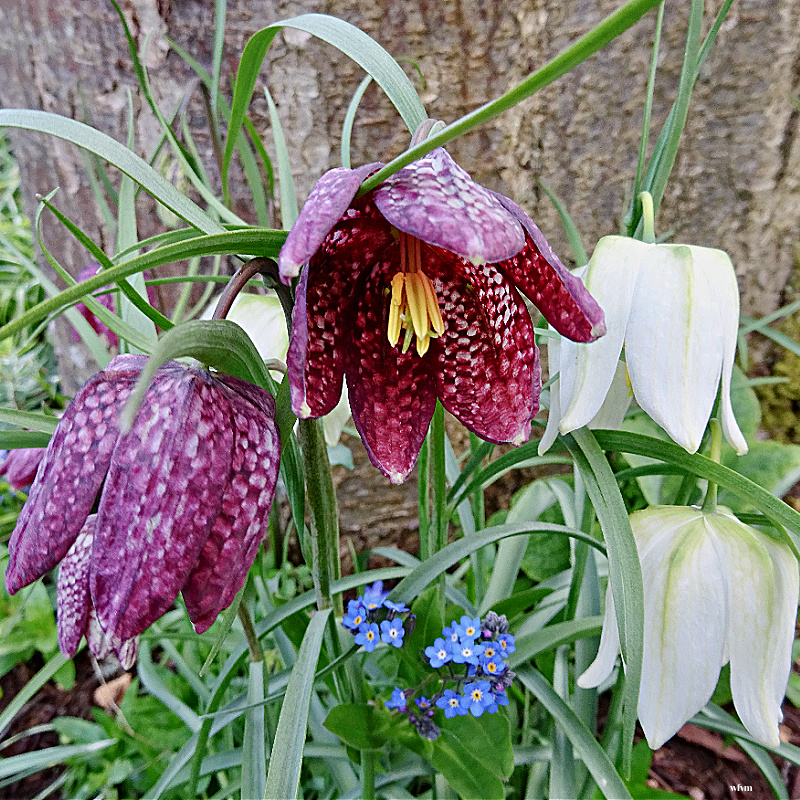
The Snake’s-head fritillary has been in full flower since the beginning of April. Like so many of our flowers this year, they are early. This fritillary is one of our most beautiful wild flowers, with its square-sided,
nodding bells, chequered in pink and white, resembling a
snakes’ scales. Some flowers are pure white, but you can still see their chequered
pattern, especially when the sun is low in the sky - kneel down, let the light of the sun shine through their beautiful translucent petals and see their delicate green chequered veins. Fritillaries are mainly inhabitants of damp meadows in the south of
England, particularly along the flood plains of the R. Thames, but they can now also be
seen in many of our gardens too. The first time that I ever saw an image of a snakeshead fritillary was during a visit to the Hunterian Museum and Art Gallery at Glasgow University. I saw this painting by Rennie Mackintosh, done in his latter years, and knew that I wanted to find out where I could actually see and find it growing in the wild.

William Morris also captured it on one of his wallpaper designs, but it would have been very familiar to him. His country house, Kelmscott, sits alongside meadows in the Thames valley where they are found in abundance in just two or three floodplain meadows close to where he lived,