Showing posts with label
Dutch water garden Westbury Court Garden flowers fruit.
Show all posts
Showing posts with label
Dutch water garden Westbury Court Garden flowers fruit.
Show all posts
was laid out during the years 1696-1705
 Engraving dated 1712 by Johannes Kip
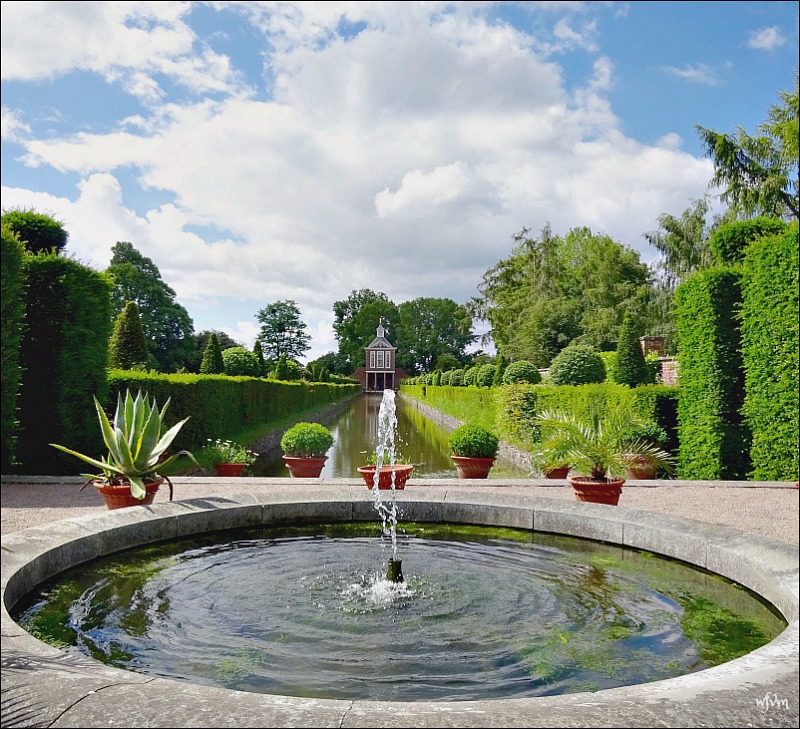
Westbury Court is a formal Dutch water garden created in a style that became fashionable during the reign of William and Mary. The fact that the garden has survived intact, whilst still retaining its unique charm and beauty, makes it a very rare survivor. Other similar water gardens were completely destroyed or have mere fragments of them left. Many were replaced by the more naturalistic school of landscape gardens introduced and popularised by Capability Brown in the late c18th.
Engraving dated 1712 by Johannes Kip
Westbury Court is a formal Dutch water garden created in a style that became fashionable during the reign of William and Mary. The fact that the garden has survived intact, whilst still retaining its unique charm and beauty, makes it a very rare survivor. Other similar water gardens were completely destroyed or have mere fragments of them left. Many were replaced by the more naturalistic school of landscape gardens introduced and popularised by Capability Brown in the late c18th.
A veritable forest of artichokes
As well as being a pleasant place to be, the garden was designed to be productive. Flowers were planted alongside beds of vegetables, water canals stocked with fish and a rabbit warren all supplied food for the table.
 A fish seen in one of the water canals but what a huge mouth he has!
The walls are lined with cordoned fruit trees - apples, pears, cherries, plums and peaches - the fruit, and flowers in the garden are all authentic to the style and period of garden.
Rhubarb Forces
Forcing rhubarb was first discovered by a gardener at the Chelsea Physic Garden in 1817 when he accidentally covered newly emerging rhubarb crowns with heaps of soil as he dug a nearby ditch. The pink, sweet, tender stems quickly shot upwards much to his surprise.
A fish seen in one of the water canals but what a huge mouth he has!
The walls are lined with cordoned fruit trees - apples, pears, cherries, plums and peaches - the fruit, and flowers in the garden are all authentic to the style and period of garden.
Rhubarb Forces
Forcing rhubarb was first discovered by a gardener at the Chelsea Physic Garden in 1817 when he accidentally covered newly emerging rhubarb crowns with heaps of soil as he dug a nearby ditch. The pink, sweet, tender stems quickly shot upwards much to his surprise.
Part 2 - the journey will continue in Westbury Court Garden but then we shall depart along a pathway which leads from the garden down to the mighty River Severn.