Showing posts with label trees & shrubs. Show all posts

Thursday, 2 June 2016

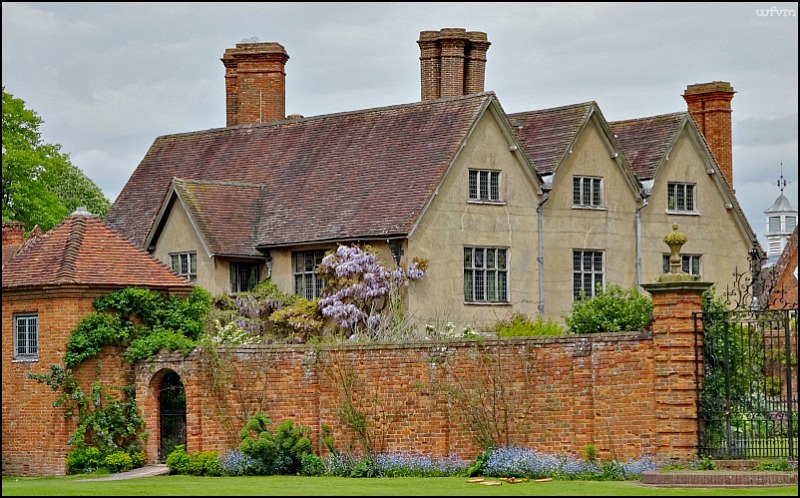
Packwood, Warwickshire


Entrance to kitchen garden
An Auricular Theatre showcasing these pretty flowers

Packwood House is a timber framed Tudor manor house constructed for John Fetherstone in 1556. It remained in the same family for over 300 years until the last member of the family died. It was purchased by a Birmingham industrialist Alfred Ash, who left it to his son Graham Baron Ash in 1925. Graham, a bachelor, devoted the next two decades to restoring the house and gardens back to its original Tudor origins.
The Yew trees were planted over 300 years ago by the Fetherstone family
Camassia growing in the meadow

Monday, 30 May 2016

Green Spaces

In England we probably take for granted our public parks, recreational areas, and the gardens created for us to enjoy within our cities and towns.  Across the centuries the great parks and gardens designed by such people as Capability Brown, Repton, and William Kent were privately owned by the aristocracy or the very wealthy and were for their use only. Only common land was available to the public on which to walk or graze some sheep or cattle, but today we also have the right to roam across moorlands, valleys, hills, and along footpaths through the countryside

The very first green space to be made especially for the public was Derby Arboretum which was gifted to the people and the town in 1840 by Joseph Strutt, a member of a prominent local family of industrialists. It still thrives today making it now not only the first but the oldest public landscaped area in any town or city in this country. Strutt was a noted philanthropist and was grateful to the working people of Derby for the part they had played in helping him and his family amass their fortune. He wanted to convey his thanks by providing a much needed recreational facility for the rapidly explanding and urbanising area. He commissioned John Claudius Loudon to design the park, but Loudon adapted Strutt's original plans for a botanical garden with pleasure grounds to his own vision using landscaped high banked walkways creating the impression of undulating countryside. It took 15 months to complete and in September 1840 the opening was marked by a parade from the centre of Derby to the new park. 


In 1859 the Arboretum was visited by Frederick Law Olmsted while on a research tour of Europe and it is thought that he incorporated features of Loudon's work into his design for Central Park, New York.
A statue of Joseph Strutt presides over the entrance to the arboretum

'Green lungs' a place for town and city dwellers to walk or jog, meet friends and relax away from the hurly-burly of everyday life
(I am aware that the green colour in this post looks unrealistic, but following the wet, slow, Spring this is how our countryside is looking this year. I have used picmonkey to try and lower the tone of the greenl)

Sunday, 1 May 2016

"Welcome to Overbeck's................

.....it is warm and beautiful here. I grow bananas, oranges, and pomegranates out in the garden, and have 3,000 palm trees planted in my woods and garden"
Otto Overbeck writing to a friend in 1933


Perched high on the cliffs above Salcombe in south Devon, and enjoying spectacular coastline views, Overbeck's is a hidden paradise of subtropical plants.
The weather, however, was definitely not subtropical - it was a wet morning, which luckily cleared up as we arrived, but remained dull with barely a peep from the sun through the clouds
"First Flight"
fledglings leave their nest
Banana grove just coming into leaf seen outside through the windows in the Garden Room
Rododendron 'Lady Alice Fitzwilliam' fills the air with a spicey nutmeg fragrance
 These Beschorneria yuccoides - Mexican lilies, look as if they might lurch out and grab you as you pass!!!
Acacia verticillata - Prickly Moses, native to Australia and Tasmania - the normally fluffy lemon flowers drenched in rain
Euphorbia characias wulfenii
Be gentle, and the friendly garden Robins might even feed out of your hand!

Sunday, 25 October 2015

Return to Rousham

Dawn 
 just look at all the jewels mother nature has draped around our garden
Sunrise 
and it looks as if today will be perfect to walk William Kent's C18th landscape at Rousham
We fell in love with Rousham on our last visit, but now we love it even more, it's a gem
Palladian stable-block designed by William Kent
We had Rousham almost to ourselves,
but someone else was present having a photo shoot - that's Monty Don in the middle! 
I always imagined he was tall
BBC Gardeners' World 
This is Monty's "Twitter" comment for the 20th October
"Spent the day at Rousham. England's greatest garden under a blue sky and warm sun, lit by brilliant autumnal colour..Sublime"
So, it appears Monty agrees with us!
We enjoyed our picnic sitting in one of William Kent's pavilion seats whilst watching Monty pose in front of the Scheemaker statue, and then they left,
but the family dog chose to come with us. 
After paying the entrance fee, described here, you collect a leaflet which shows a reproduction of the original walking circuit drawn in 1738  
The grounds are beautifully tended by half a dozen gardeners who lovingly maintain it  
Dying Gladiator
Rousham represents the first phase of English landscape design, i.e before Capability Brown or Humphry Repton. It remains almost as William Kent left it, one of the few gardens of this date to have escaped alteration. Happily the features that delighted C18th visitors are mostly still in situ. 
Octagonal pool with the figure of Pan lurking in the shadows
The upper cascade where Venus presides over the glade
Lower cascade with Venus in the distance 
The Watery Walk takes you on a gentle stroll through the woods accompanied by the most magnificent serpentine rill
It gently twists and turns as it chuckles merrily on its journey
running in and out of a feature called the Cold Bath before eventually reaching its source on the brow of the hill
 near to the Temple of Echo
The hill drops down to the River Cherwell which flows beneath Heyford Bridge built nearly 800 years ago
Watched over by Apollo
Apollo seen from Venus' Glade
Following the course of the river we catch our first glimpse of Kent's Praeneste Terrace
The terrace is modelled on the Temple of Fortune at Praeneste, Italy; a famous Roman ruin, much studied by Renaissance architects Ligorio and Palladio, and generally visited as a prime site on Grand Tours
A lovely place to sit, to contemplate, to dream, and while away some time 
whilst the Cherwell meanders on through the meadows to Oxford and then the Thames
Arcading, soft colours, elegant seating - I feel as if I've been transported to Italy 'perfezione' but no! I pinch myself, I'm still here, sitting in the Cotswolds!
We couldn't resist a final peep into the walled garden

now filled with autumn flowers and colours
Rousham's historic C17th dovecote 
A  bag full of 'help yourself apples' came home with us - there will be plenty of apple pies and crumble to enjoy during the winter months, but we shall definitely return to Rousham again, and again, and again♡